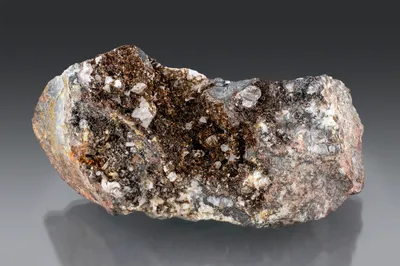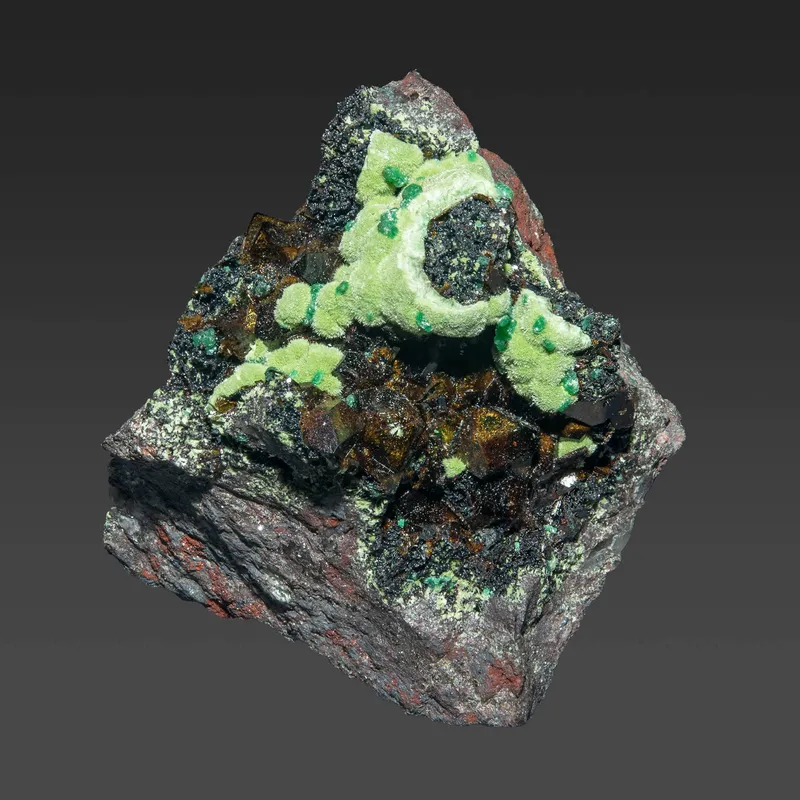
Image Credit: Malcolm Southwood
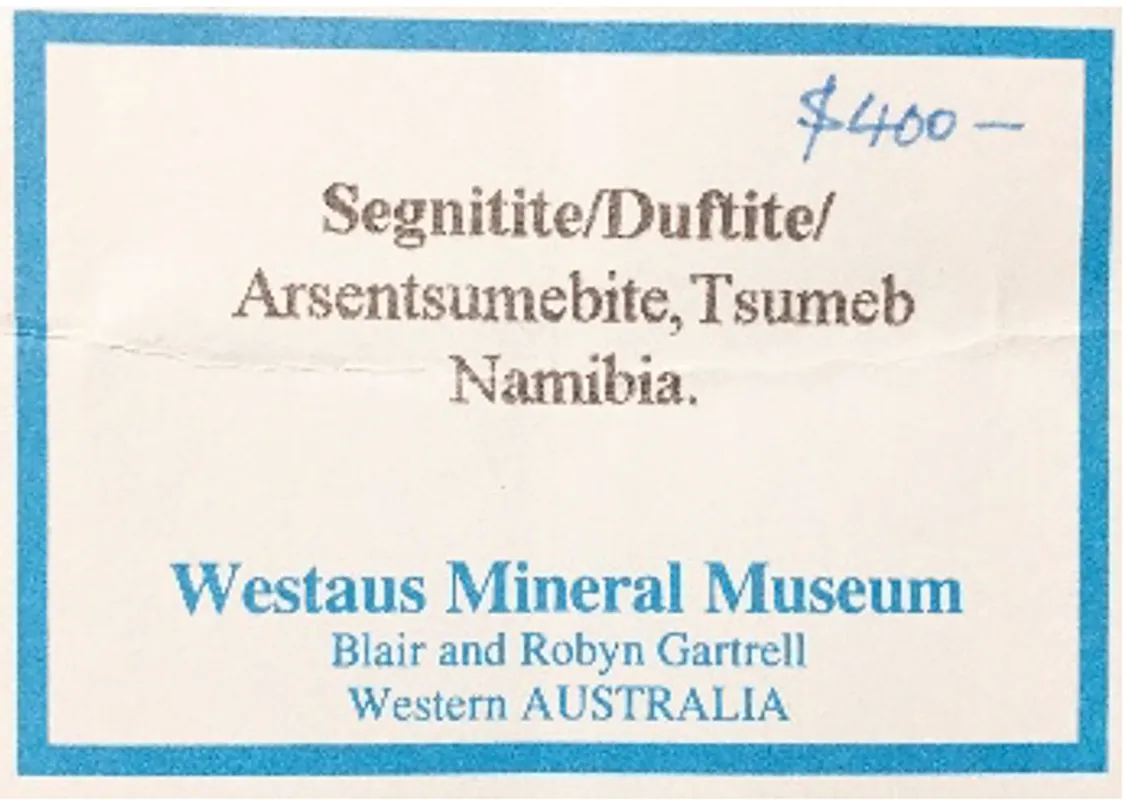
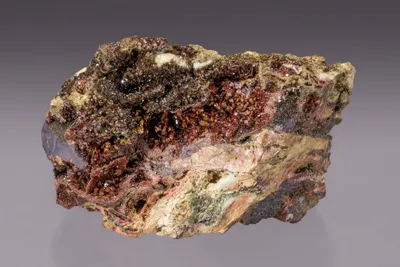
Image Credit: MGMH archive
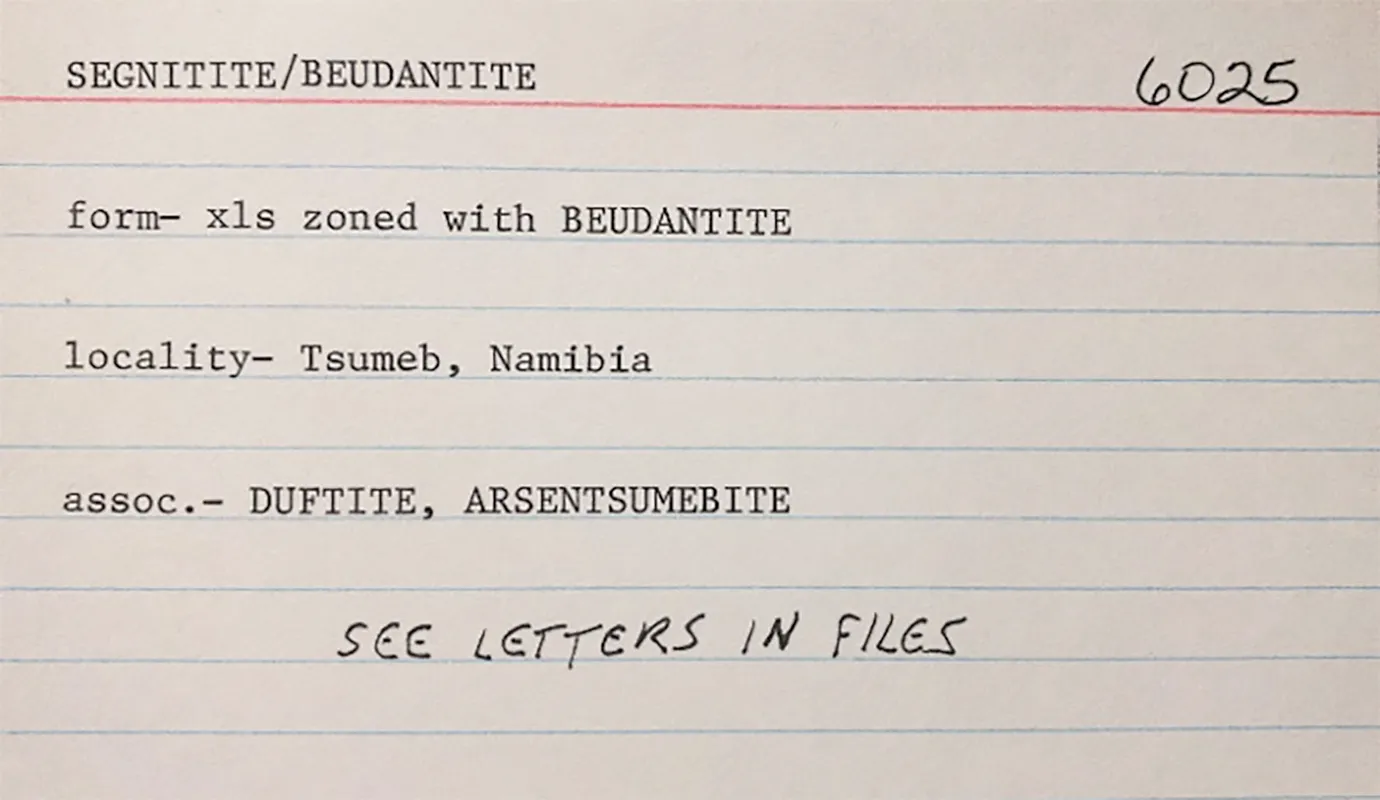
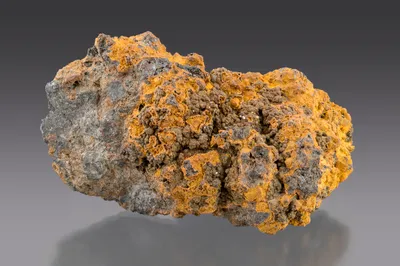
Image Credit: MGMH archive
Specimen Title
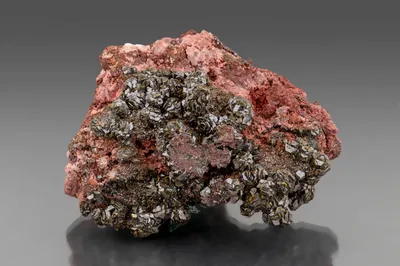
Beudantite (w. duftite and arsentsumebite)
Associated Minerals
arsentsumebite; duftite; goethite
Principal Mineral
Size
Miniature; 32mm
Location in the Mine
Second oxidation zone
Provenance
Innes, J.; Gartrell, B.; Feinglos, M.N.
Collection
MGMH; 2022.4.6025L
Entry Number
Specimen; TSNB847
Description
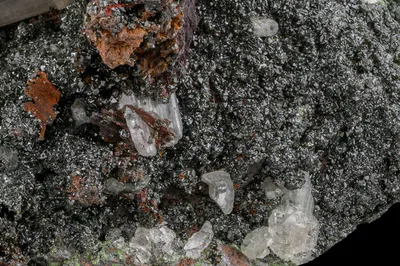
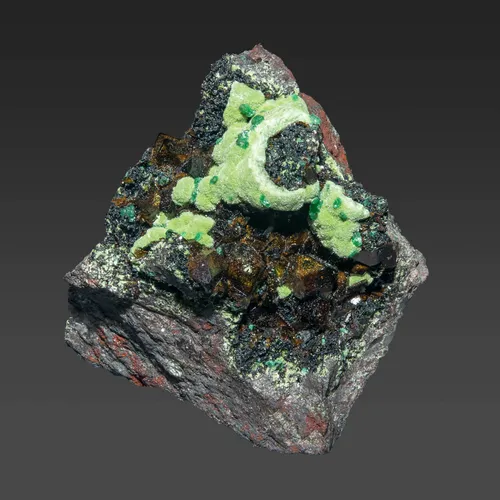
A shallow vug in massive sulphide ore, lined with equant crystals of lustrous, chocolate-brown beudantite (to 4 mm), partly altered to goethite at the contact with the sulphide. The beudantite is locally overgrown by a spheroidal crust of fibrous, pistachio-green duftite which is in turn supplanted with isolated, individual crystals of spearmint-green arsentsumebite. All minerals have been verified by EDS analysis (Frank Keutsch; Harvard University, 2023 and 2025).
Mark Feinglos acquired this specimen from Blair Gartrell (Australia) in February 1994; it was originally in the collection of TCL mineralogist John Innes.
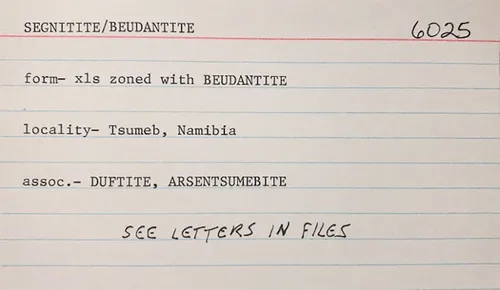
Based on a provisional analysis at the CSIRO (in Perth, Australia), Gartrell had labelled the specimen as "Segnitite / Duftite / Arsentsumebite" (Exhibit 2). Feinglos submitted a sample of the "segnitite" for verification, however, and determined that it is beudantite (John Jambor, pers. comm. to Mark Feinglos, 1994). Nevertheless, the Feinglos data card (Exhibit 3) describes the specimen as "Segnitite / Beudantite". Modern analysis of this specimen (and others from the same paragenesis) has established that the principal mineral is indeed beudantite; no compositions consistent with segnitite have been observed.