Image Credit: Malcolm Southwood
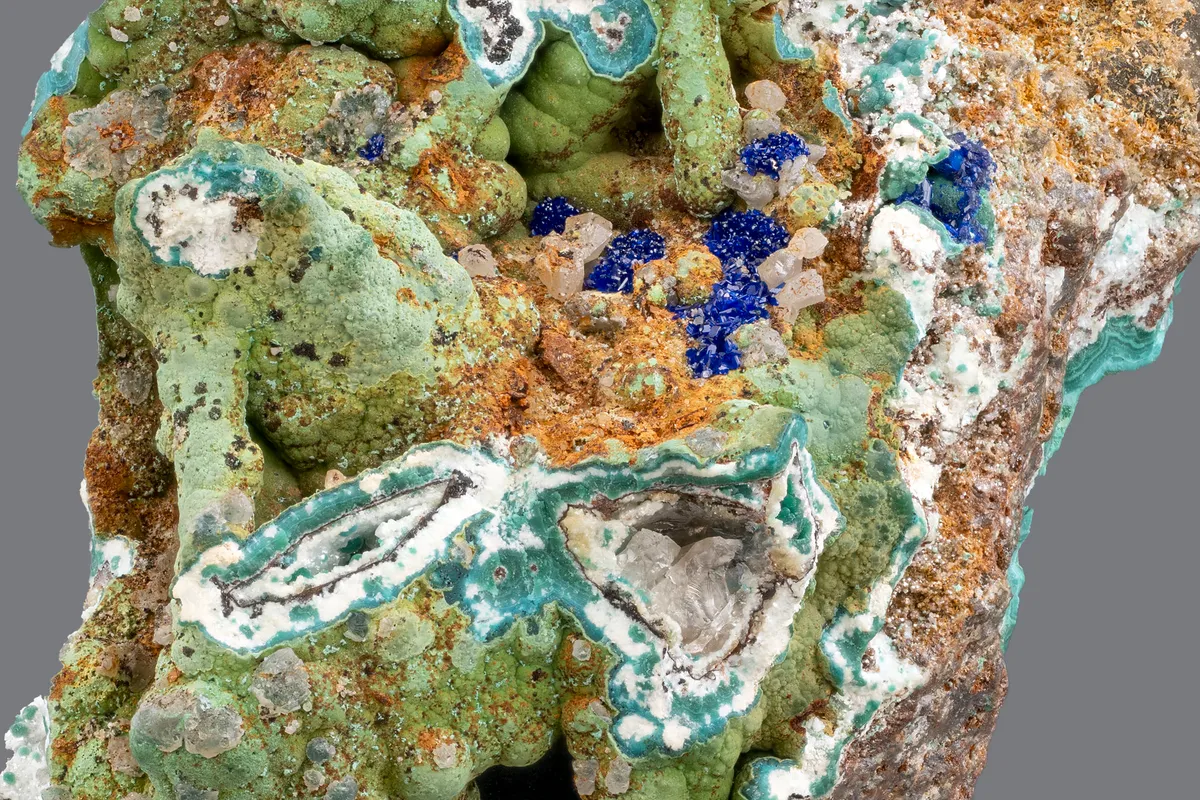
Image Credit: Malcolm Southwood
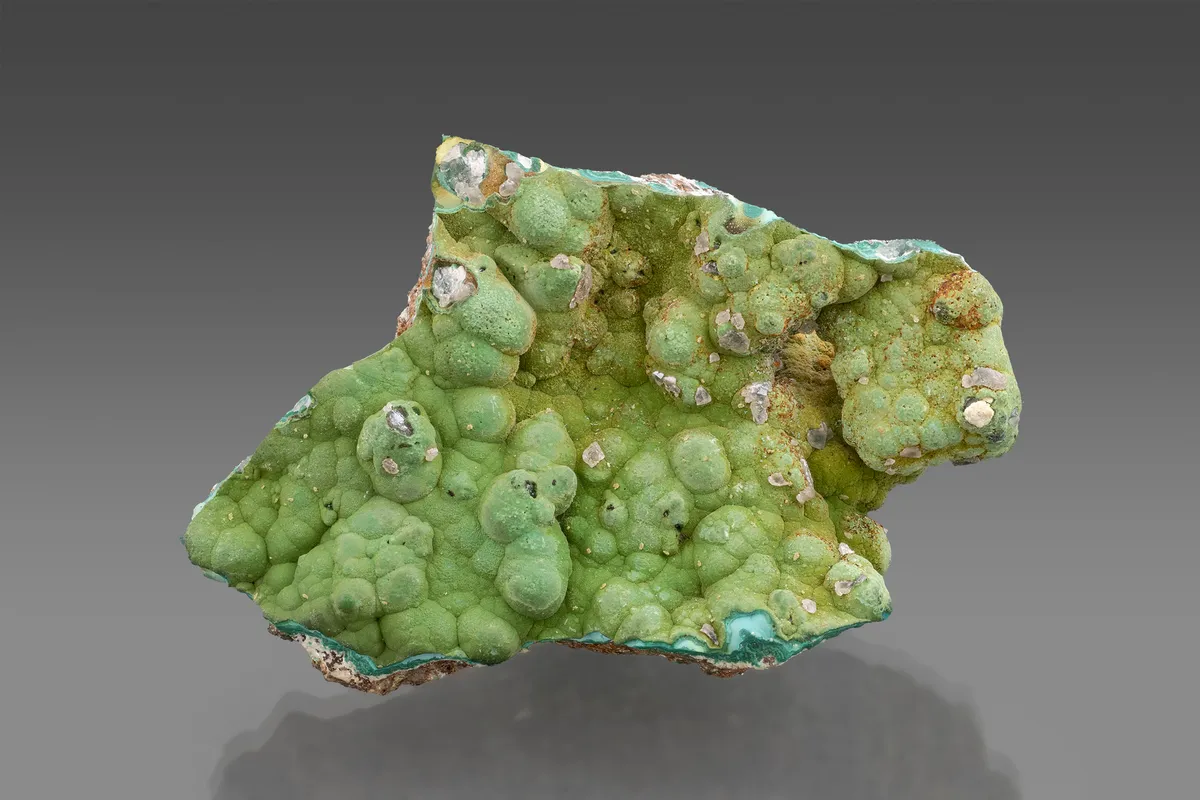
Image Credit: Malcolm Southwood
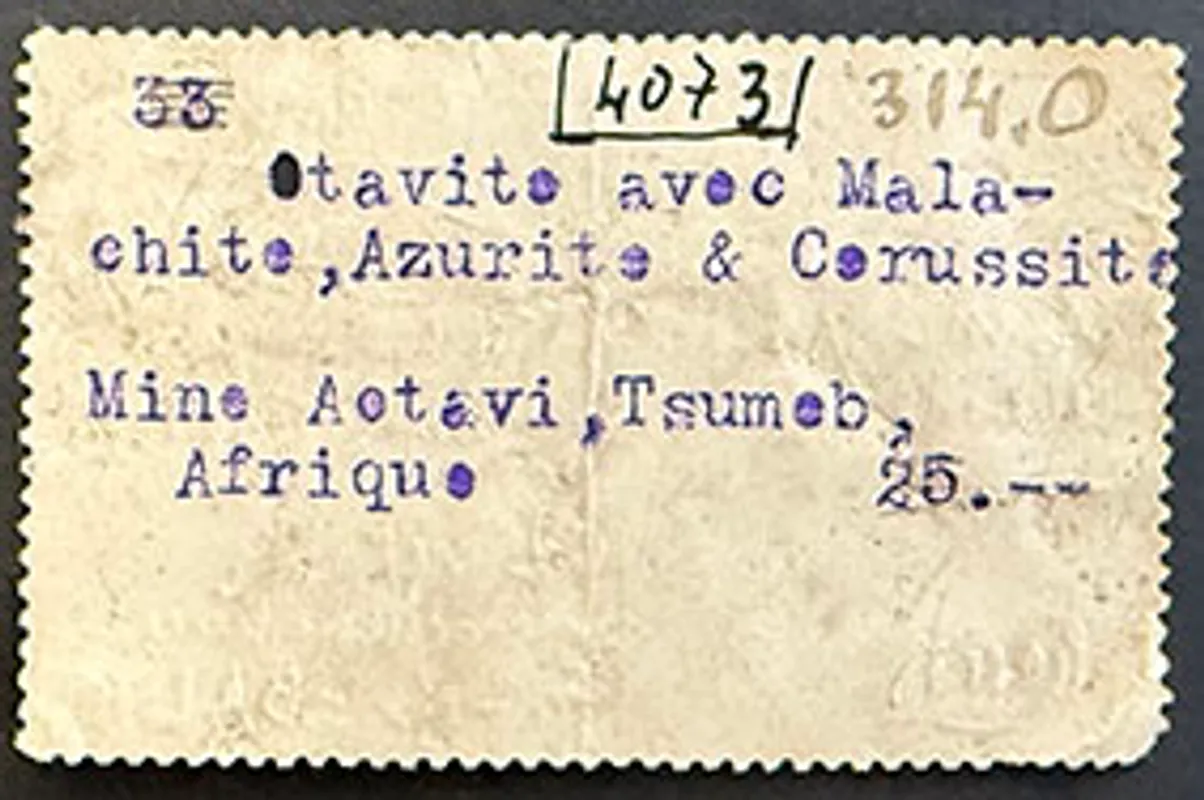
Image Credit: MGMH Archive
Specimen Title
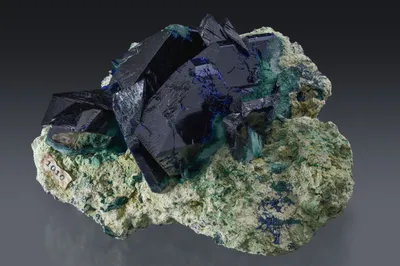
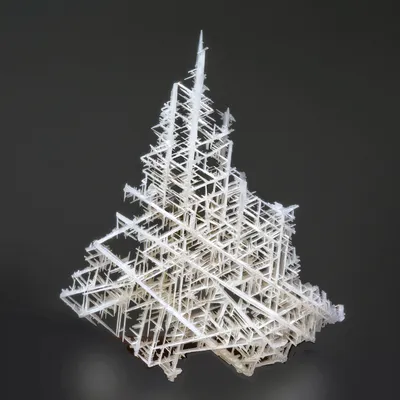
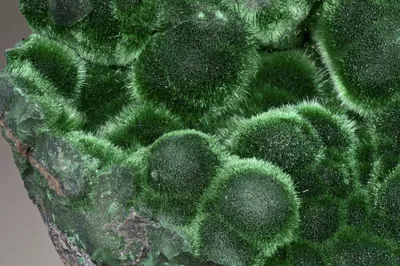
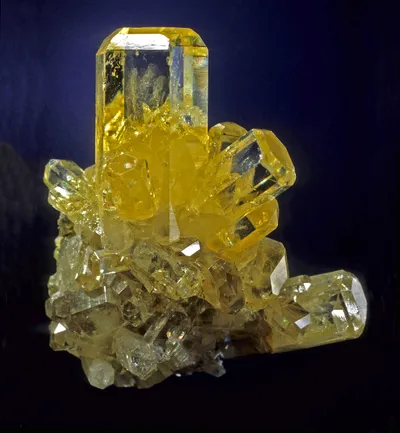
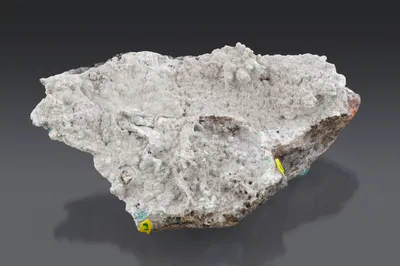
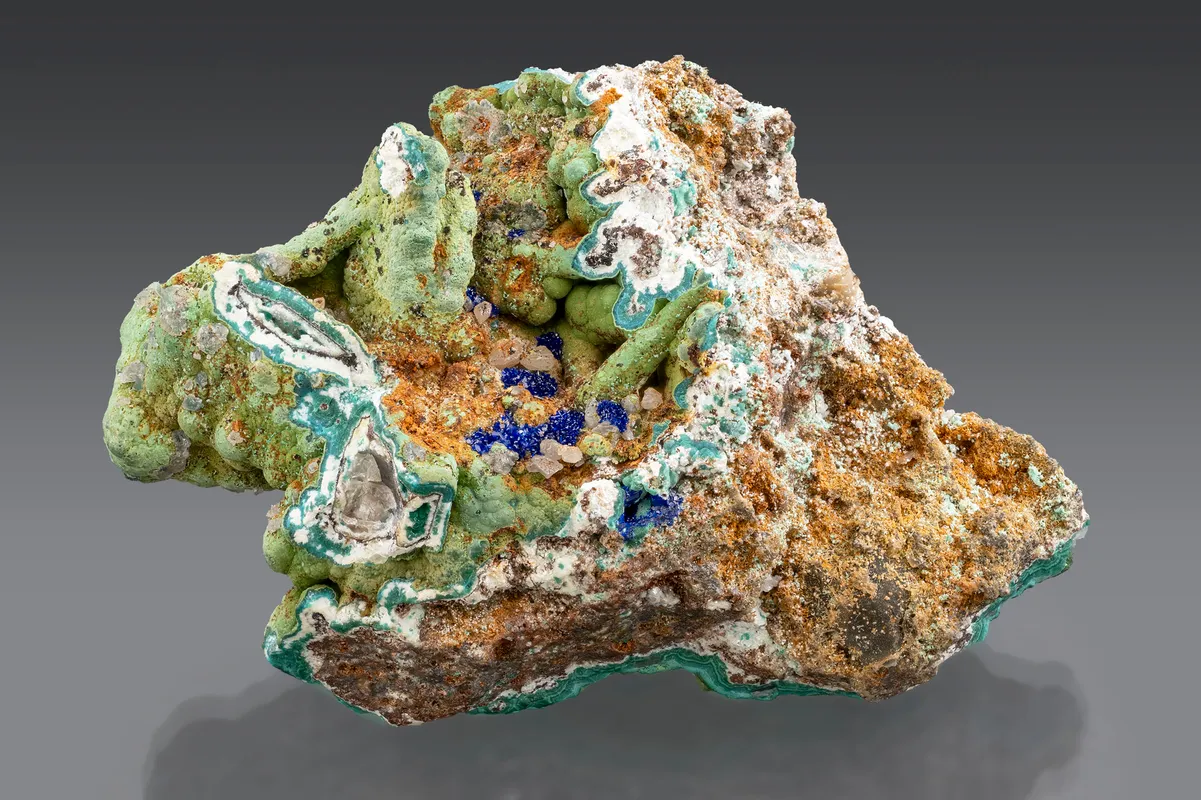
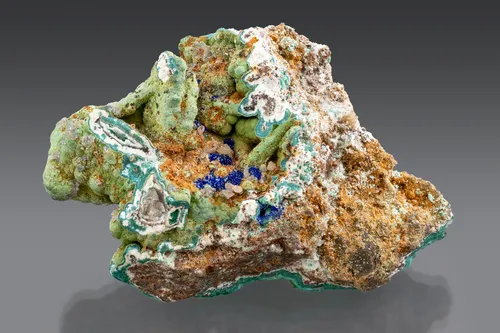
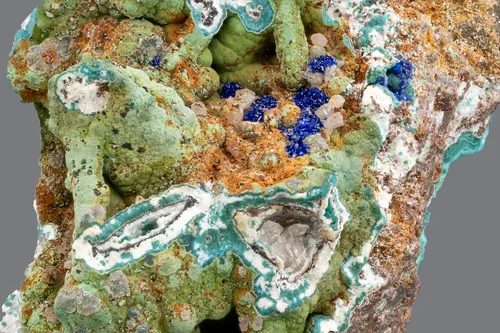
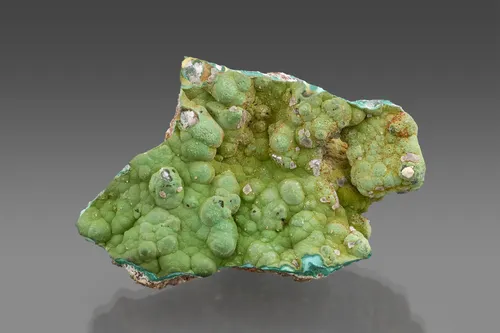
Otavite (w. azurite and Cu-Pb arsenates)
Associated Minerals
azurite; cerussite; malachite; mimetite; undetermined
Principal Mineral
Size
Miniature; 49mm
Location in the Mine
First oxidation zone
Provenance
Cisneros, S. & E.; Feinglos, M.N.
Collection
MGMH; 2022.4.3957L
Entry Number
Specimen; TSNB661
Description
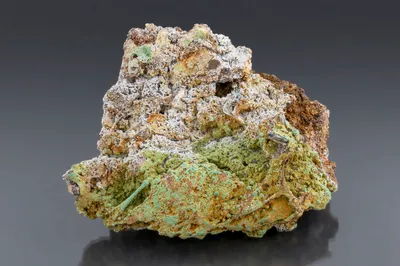
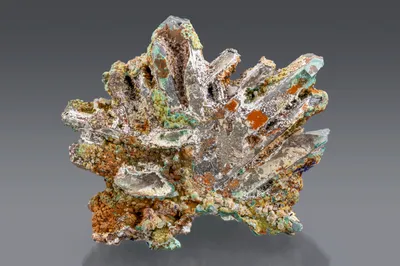
Crusts of pearlescent-white otavite crystals forming part of a complex paragenesis of layered carbonates and arsenates. An early generation of azurite is completely replaced by malachite and arsenates (undetermined), while early mimetite (?) crystals are altered to the same Cu-Pb arsenates (Exhibit 2). Later generation crystals of azurite, cerussite and mimetite clearly post-date the Cu-Pb arsenates.
Otavite is EDS confirmed (Frank Keutsch; Harvard University, 2025). It fluoresces a bright orange-pink in short wavelength ultraviolet radiation.
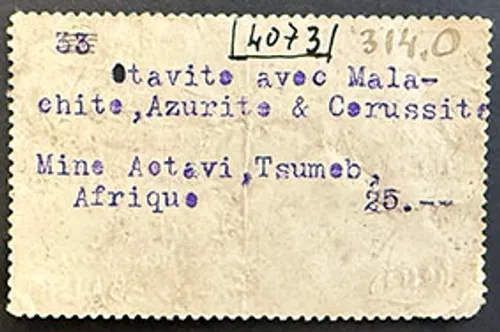
Mark Feinglos acquired this specimen from Sharon and Gene Cisneros in 1980. It is accompanied by an older (anonymous) label in French (Exhibit 4). While there is no record of the location in the mine the paragenesis is diagnostic for the upper levels of the first oxidation zone.