Mineral Species
Briartite
Type Locality
No
Composition
Cu2(Fe2+,Zn)GeS4
Crystal System
Tetragonal
Status at Tsumeb
Confirmed
Abundance
Very rare
Distribution
Second oxidation zone; sulphide ores
Paragenesis
Hypogene
Entry Number
Species; TSNB60
General Notes
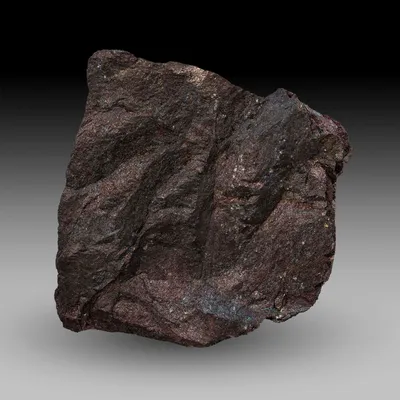
Masses of briartite to 5 kg (at the time unidentified) were found just above 30 Level by Bruno Geier in 1955 (Gebhard, 1999). Briartite was formally described from Kipushi by Francotte et al. (1965). The first formal report of briartite from Tsumeb was published two years later by Strunz and Tennyson (1967).
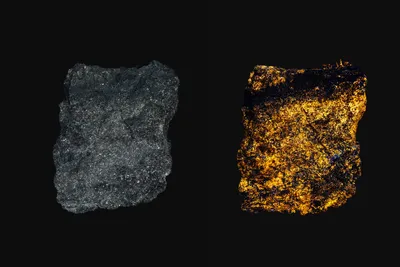
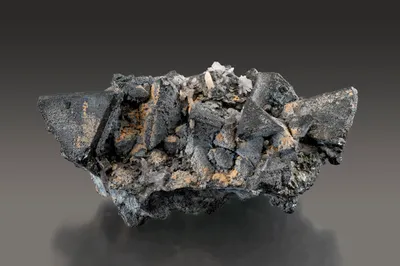
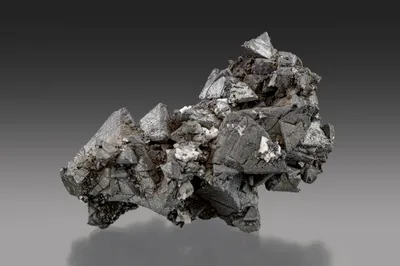
Briartite is a rare, inconspicuous, grey mineral with a dull metallic sheen. It occurs either as ovoid masses in tennantite, germanite, and renierite and as minute inclusions in sphalerite, or it forms a very fine intergrowth with tennantite and renierite, in sphalerite (Keller, 1977). Note that these textures are only visible in polished section, with reflected light microscopy.
Lombaard et al. (1986) tentatively placed briartite as an early-formed mineral in the hypogene paragenesis, coeval with germanite(i) and a first generation of sphalerite.
Hughes (1987) considered briartite rare at Tsumeb. He described exsolution intergrowths of briartite with mawsonite associated with tennantite, bornite and sphalerite.
McDonald et al. (2016) described a zinc analogue of briartite (from Kipushi in the Democratic Republic of Congo) which they named zincobriartite. Subsequent quantitative and semi-quantitative analyses have indicated that a high proportion of Tsumeb “briartites” are in fact zincobriartite (Frank Keutsch, pers. comm. to M. Southwood 2025).
Associated Minerals
bornite; kësterite; mawsonite; renierite; sphalerite; tennantite-(Zn)