Mineral Species
Brucite
Type Locality
No
Composition
Mg(OH)2
Crystal System
Trigonal
Status at Tsumeb
Believed valid
Abundance
Extremely rare
Distribution
Undetermined
Paragenesis
Supergene
Entry Number
Species; TSNB63
General Notes
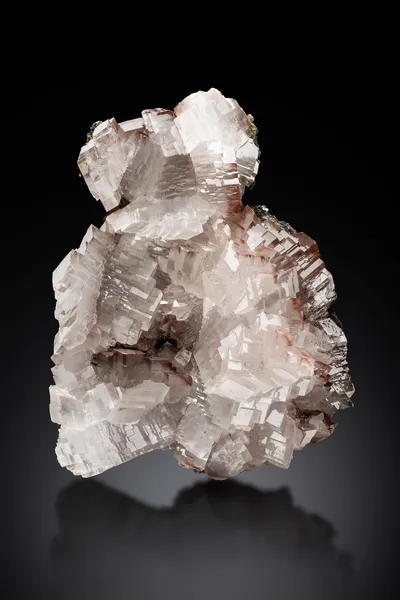
Brucite was first recognised at Tsumeb by Belendorff (2006) on a specimen from "… an old German collection". It occurs as dull-white tabular crystals arranged in rosette-like aggregates, and as earthy crusts (with sepiolite), as part of an unusual paragenesis with the following sequence:
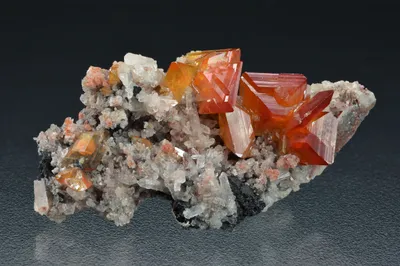
cerussite (with hydrocerussite) >> wulfenite >> dolomite >> parkinsonite >> calcite (rhombohedral) >> brucite (with sepiolite) >> calcite (scalenohedral).
Although considered extremely rare at Tsumeb, brucite would be readily overlooked.
Notably, parkinsonite (a rare lead-molybdenum oxychloride) was also first identified from Tsumeb from this same specimen (Belendorff 2006).
Associated Minerals
calcite; dolomite; parkinsonite; sepiolite; wulfenite